Uncategorized
Weed Laws for Tourists in Korea Explained
Apr
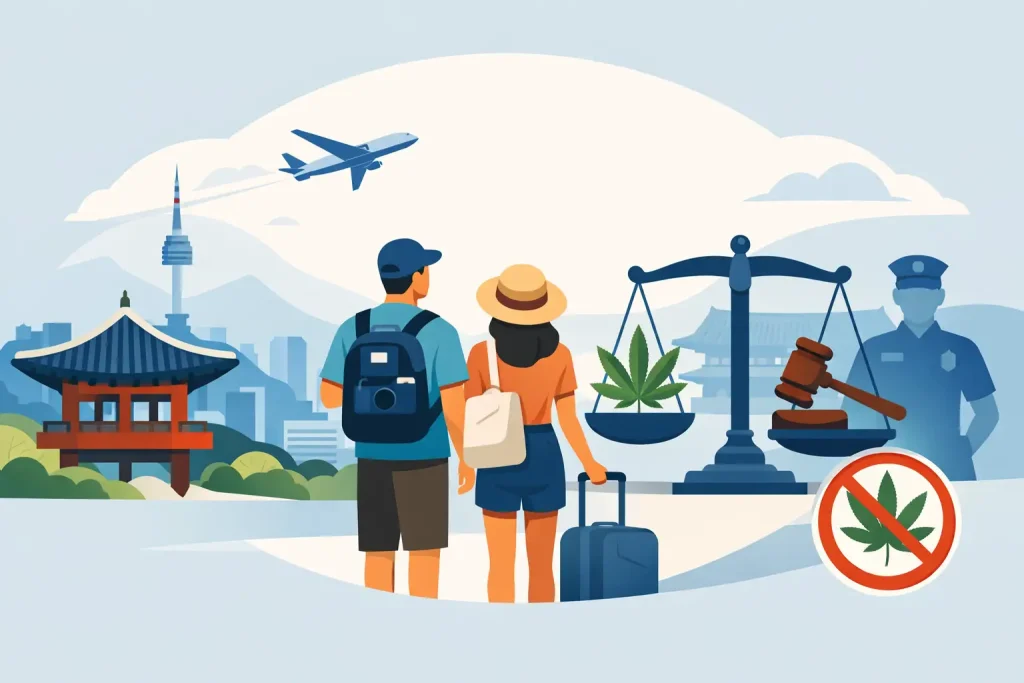
Landing in Korea with a casual attitude about cannabis is where people get burned. Weed laws for tourists in Korea are not soft, not vague, and not something you want to test on a short trip. If you are coming from a place where dispensaries are normal and a weed pen barely gets a second look, Korea is a very different situation.
This is one of those topics where assumptions cause problems. Travelers often think personal use, tiny amounts, or foreign prescriptions will smooth things over. That logic may work elsewhere. In Korea, it can fall apart fast.
How weed laws for tourists in Korea actually work
Korea treats cannabis as a controlled drug, and the legal posture is strict. For tourists, the biggest mistake is assuming there is some unofficial tolerance for private use, edibles, or vape cartridges. There is no useful gray zone for visitors to rely on.
Possession matters. Use matters. Importing matters. Even carrying a small amount into the country can trigger serious legal trouble. That includes flower, carts, gummies, oils, and products people sometimes do not even mentally file as weed. If it contains THC, you are in risky territory. Depending on the product and the facts, CBD can also create issues if it is not clearly compliant and documented.
The hard part for tourists is that intent does not always save you. Saying it is for sleep, pain, anxiety, or that it is legal back home is not much of a shield. Korea does not adjust its drug laws because a visitor comes from a legal state or a legal country.
What tourists get wrong before they arrive
A lot of travelers make the same bad call in different ways. They pack a cartridge in a toiletry bag. They leave gummies in a vitamin jar. They forget a pre-roll tube in a backpack pocket from the last leg of the trip. Then they assume customs will overlook it because it is accidental or personal.
That is not a safe bet.
Airports are where minor carelessness turns into major consequences. Even if someone is not actively searching for weed, modern screening catches more than people think. Vape hardware, edible packaging, residue, and mislabeled containers can invite attention. Once a bag is opened and a substance is identified, the conversation gets serious.
Another common misunderstanding is believing medical authorization from abroad changes the legal picture. In most cases, it does not. A medical marijuana card from the US is not a free pass in Korea. Neither is a doctor note saying you use cannabis for treatment.
Are weed laws for tourists in Korea enforced hard?
Yes, and that is the part people try to downplay. Korea has a tough anti-drug posture, and enforcement is not built around making visitors comfortable. Tourists are not immune because they are leaving in five days. In some cases, being a foreign national can make the situation more complicated, not less.
What happens after an arrest or seizure depends on the amount, the product type, whether there was actual use, and whether there are signs of supply or distribution. But even without the worst-case outcome, you can still be dealing with detention, questioning, legal fees, embassy contact, disrupted travel, and a record of the incident.
There is also the practical damage. Missed flights, cancelled hotel plans, work problems back home, visa trouble, and travel restrictions can all flow from one bad decision. People tend to imagine only the courtroom risk and ignore the mess that starts long before that.
The difference between use, possession, and trafficking
Not every cannabis case is treated the same. A tourist caught with a leftover edible is not in the same category as someone carrying multiple packaged items, large amounts, or messaging that suggests resale. But that does not mean simple possession is treated lightly.
Use and possession are enough to create real legal exposure. Importing into the country raises the stakes further. If authorities think the amount, packaging, or communications suggest sale or delivery, the problem gets much bigger.
This is why people should stop thinking only in terms of quantity. Small amount does not equal safe. A single cartridge can still produce a very bad trip for reasons that have nothing to do with getting high.
What about smoking privately in a hotel or rental?
Private does not mean invisible. Hotels, serviced apartments, and rentals are not great places to test discretion. Smell travels. Smoke detectors exist. Staff notice patterns. Trash gets handled by other people. Even vaping, which some tourists think is low-risk, is not some magic workaround.
There is also the simple reality that travel makes people sloppy. They leave wrappers out, store product badly, text the wrong person, or carry something while moving between neighborhoods. What feels controlled for an hour often stops being controlled by the end of the night.
That matters because Korea is not a place where you want avoidable attention around drugs. If you are asking whether private use is safer than public use, the honest answer is only in a narrow sense. Safer does not mean safe.
Why legal weed back home does not help you here
This is where cultural carryover causes trouble. Tourists from legal US states often bring the mindset that cannabis is basically normalized now. They are used to product menus, branded packaging, dosage labels, and low social friction. Korea is not operating on that script.
Local law controls what happens on Korean soil. Your home state, your personal beliefs, and your buying habits somewhere else do not travel with you as legal protection. That gap between what feels normal and what is actually allowed is exactly where visitors make mistakes.
The same thing goes for casual conversation. Joking about finding weed, asking hotel staff, or posting on social media like it is no big deal is a dumb move. In strict markets, loose talk creates risk all by itself.
What tourists should do instead
The cleanest move is simple – do not bring cannabis into Korea, do not try to source it casually once you land, and do not assume tourist status buys flexibility. That may sound obvious, but people still talk themselves into exceptions every day.
If you use cannabis routinely at home, plan for that reality before your trip. Expect a break. Think through sleep support, stress management, and whatever else you usually handle with THC. Do that before boarding, not after you start asking around in a place with strict drug laws.
If you are already in Korea and worried about something in your luggage, the smartest answer is not to improvise with half-baked tricks. Panic creates worse choices. The key lesson here is that prevention matters more than recovery.
The real risk calculation for visitors
People like to frame cannabis choices in personal terms – I can handle it, I only need a little, I know how to be discreet. That misses the real issue. The question is not whether you are experienced with weed. The question is whether the legal environment gives you room for error.
For tourists in Korea, that room is small.
Even if enforcement is uneven in specific situations, even if some people get lucky, and even if stories circulate about others getting away with it, that is not the same thing as low risk. Travel already puts you in unfamiliar systems with fewer rights, less language control, and less ability to stabilize a bad situation quickly.
That is why this topic is less about morality and more about cost. A weed product that feels minor at home can become the most expensive thing you touch on your entire trip.
If you are visiting Korea, treat cannabis like a line you do not casually cross. A short vacation is a bad time to learn how serious another country can be.
You Might Also Like These:
SATIVA
- KRW: ₩ 527,005,570.96 - ₩ 3,689,038,970.22
SATIVA
- KRW: ₩ 527,005,570.96 - ₩ 3,689,038,970.22
HYBRID
- KRW: ₩ 527,005,570.96 - ₩ 3,689,038,970.22
INDICA
- KRW: ₩ 527,005,570.96 - ₩ 3,689,038,970.22
HYBRID
- KRW: ₩ 527,005,570.96 - ₩ 3,689,038,970.22
INDICA
- KRW: ₩ 527,005,570.96 - ₩ 3,689,038,970.22
