
Uncategorized
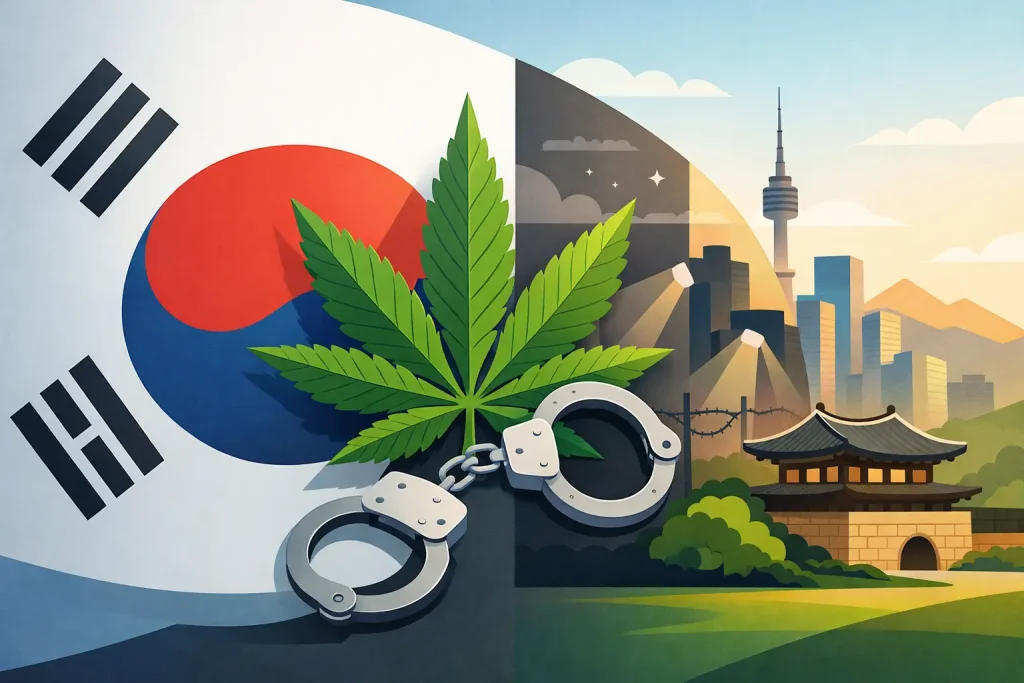
Is Weed Legal in South Korea? The Real Answer
Apr
Land in Seoul, ask around once, and you learn fast that this is not a casual weed market. If you are wondering is weed legal in South Korea, the short answer is no for almost everyone, and the long answer matters because the penalties, police attention, and social consequences can get serious very quickly.
This is not one of those countries where the law says one thing and daily life says another. South Korea treats cannabis as a controlled narcotic, and that shapes everything – buying, carrying, using, importing, mailing, and even talking too casually about it in the wrong setting. If you are a local, an expat, or a traveler thinking the rules might be flexible, that assumption can cost you.
Is weed legal in South Korea for any normal buyer?
No. For regular adults, recreational cannabis is illegal. That includes flower, edibles, vapes, concentrates, hash, and most products that contain THC. Possession is illegal. Use is illegal. Buying and selling are illegal. Bringing weed into the country is illegal, and trying to send it by mail is also illegal.
There is a narrow medical exception, but it is not an open-door system where anyone can get a prescription and shop around. South Korea has allowed limited access to certain cannabis-based medicines in tightly controlled circumstances. That does not mean dispensary-style access, and it definitely does not mean general weed is legal.
So if your question is simple – can you legally buy weed for personal use in South Korea? – the answer is no.
Why the law feels stricter than people expect
A lot of places have cannabis laws on paper that are harsh but unevenly enforced. South Korea has a different reputation. Drug enforcement is taken seriously, and cannabis is not usually treated as a soft exception just because it is considered mild somewhere else.
That difference catches foreigners off guard. Some come from places where weed is medically legal, decriminalized, or fully legal, and they assume a small amount will be ignored. South Korea does not share that attitude. Authorities can investigate possession, use, imports, and sales aggressively, and even an allegation can create major trouble.
There is also a cultural side to this. Drug offenses carry a strong stigma beyond the legal penalty itself. For students, workers, teachers, entertainers, military personnel, and public-facing professionals, a cannabis case can wreck more than a weekend. It can affect jobs, visas, school standing, and reputation.
What happens if you get caught with weed in South Korea?
That depends on what happened, how much was involved, whether police believe there was intent to sell, and whether there is a repeat history. Still, the baseline risk is real. People caught with cannabis can face arrest, questioning, testing, prosecution, fines, detention, and possible jail time.
Simple possession and personal use are already enough to trigger a criminal case. If authorities think you were distributing, importing, or arranging sales, the situation gets much worse. The law does not only target large operators. Small transactions can still bring heavy consequences.
Foreign nationals have another layer of risk. Even if someone avoids the harshest sentence, immigration trouble can follow. Visa cancellation, deportation, or future entry problems are all possible. Tourists sometimes think they can quietly pay a fine and move on. That is not a safe assumption here.
Can Koreans get in trouble for using weed overseas?
Yes, and this is one of the details people miss. South Korean citizens can face legal trouble for using cannabis abroad even if they used it in a place where it was legal. That sounds extreme to many Americans, but it reflects how seriously the country approaches narcotics law.
In practical terms, that means a Korean citizen cannot rely on local legality in another country as a shield once they return home. Public agencies in Korea have repeatedly warned citizens about this issue. For travelers, students abroad, and dual-context users, that is a major difference from the way many people think cannabis law works.
This point matters because it shows the bigger picture. The system is not only focused on local street possession. It is built around a broad anti-drug posture.
Is medical cannabis legal in South Korea?
Only in a very limited and highly regulated way. Some approved cannabis-derived medications may be available for certain specific medical conditions through formal authorization. That is not the same as legal weed in the way most people use the term.
Patients cannot treat this like an ordinary retail market. Approval is narrow, product options are restricted, and the process is tightly controlled. Smoking flower for medical reasons is not generally the model. Neither is casual self-diagnosis.
So if someone tells you weed is legal in South Korea because medical cannabis exists, that is misleading. A tiny medical exception does not change the reality for recreational users.
Are CBD products legal?
This is where people get confused, because not every hemp or CBD item is treated the same way everywhere. In South Korea, buyers should not assume a CBD label makes a product safe or legal to import, possess, or use.
Rules around ingredients, THC traces, product type, and import approval can create problems. A bottle bought legally in the US can still become a customs issue in Korea. The common traveler habit of tossing a vape cartridge or CBD gummies into a bag is especially risky when entering a country with strict narcotics enforcement.
If you are looking at any cannabis-adjacent product, the smart move is caution, not assumptions.
How police and customs risk actually plays out
The biggest mistake people make is thinking risk only starts after a face-to-face deal. In reality, exposure can happen much earlier. Customs screening, package interception, digital communications, payment trails, and tip-based investigations all create risk before a product ever reaches your hand.
That means importing from abroad is not some clever workaround. It often adds a more serious layer because now you are dealing with border control and possible trafficking-related issues. Domestic movement is not automatically safe either. Messages, delivery coordination, and repeated small orders can all build a pattern authorities may care about.
There is no universal script for enforcement. Some cases stay quiet for a while, and others escalate fast. That uncertainty is part of the danger.
What buyers usually get wrong
The first bad assumption is that a personal amount does not matter. It does. The second is that private use at home means no one will ever know. That depends on neighbors, devices, messages, deliveries, and luck. The third is that foreigners are not worth the trouble. That is false.
Another mistake is relying on rumor. People hear that someone smoked once and nothing happened, or that one product got through customs, and they treat that as proof of safety. It is not. In a restrictive market, a few quiet outcomes do not erase the legal reality.
If your real question is not just is weed legal in South Korea, but also how much risk surrounds it, the honest answer is this: more than many buyers expect, and often more than they are prepared to deal with after the fact.
So what should you take from all this?
South Korea is not a gray-zone cannabis destination. It is a country with strict anti-cannabis laws, narrow medical exceptions, and real consequences for possession, use, sale, and importation. That is true whether you are curious, experienced, visiting, or trying to source quietly.
People still look for access, and that is exactly why this topic keeps getting searched. But search interest does not change the legal facts. If you are weighing your options, do it with clear eyes, not with the fantasy that weed is basically tolerated here because it is tolerated somewhere else.
The smartest move is to understand the law before you make a decision you cannot easily walk back.
You Might Also Like These:
SATIVA
- KRW: ₩ 527,005,570.96 - ₩ 3,689,038,970.22
SATIVA
- KRW: ₩ 527,005,570.96 - ₩ 3,689,038,970.22
HYBRID
- KRW: ₩ 527,005,570.96 - ₩ 3,689,038,970.22
INDICA
- KRW: ₩ 527,005,570.96 - ₩ 3,689,038,970.22
HYBRID
- KRW: ₩ 527,005,570.96 - ₩ 3,689,038,970.22
INDICA
- KRW: ₩ 527,005,570.96 - ₩ 3,689,038,970.22
